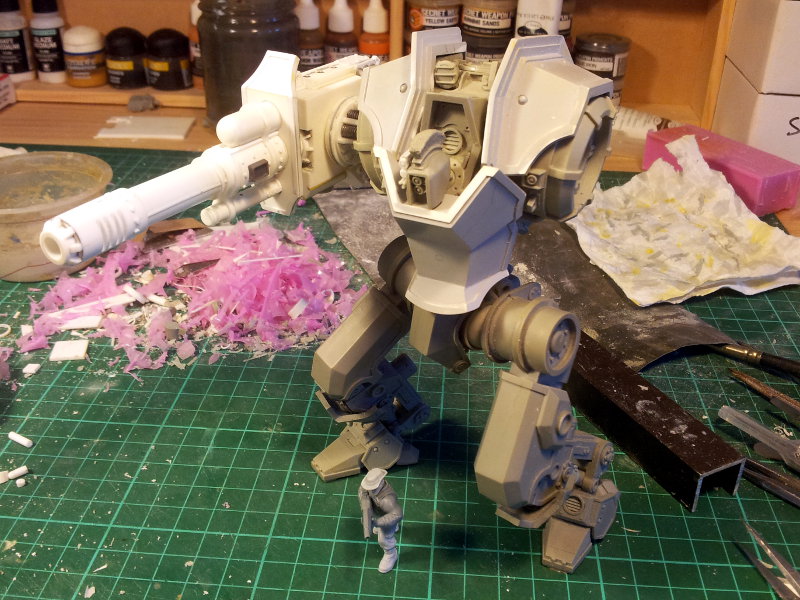
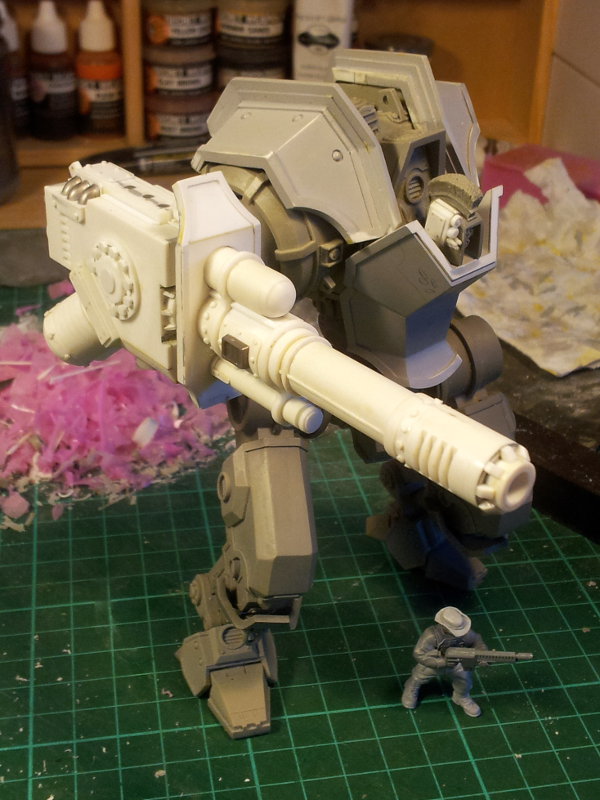
Centurion Update

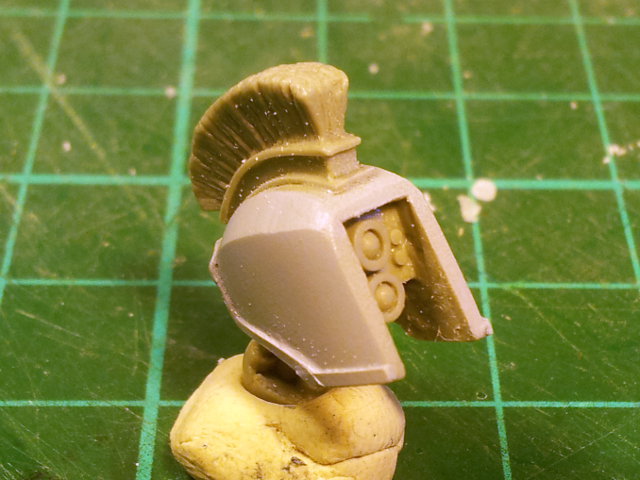
OK I’ve got a quick update for tonight. The problem with regards to updating at the moment is that I’ve been doing little bits of work on lots of different pieces, working out how the torso is going to go together. My sculptor is going to have the naked figure done in a weeks time, at which point it will be moulded and duplicated. He will continue sculpting over the top of a resin cast and I will use a cast for proportioning the cockpit. Since the cockpit design will largely affect the torso layout I’ve got to wait until that is done before the torso can really come together.

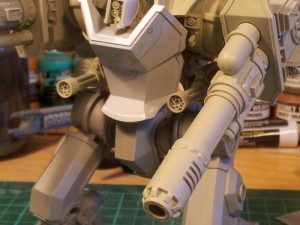
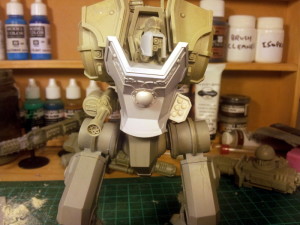
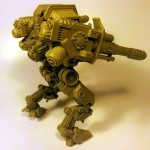
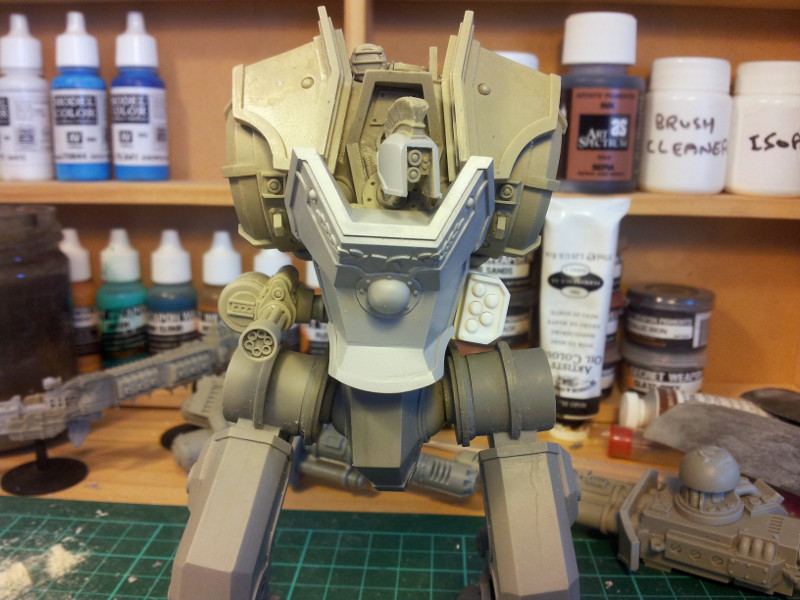
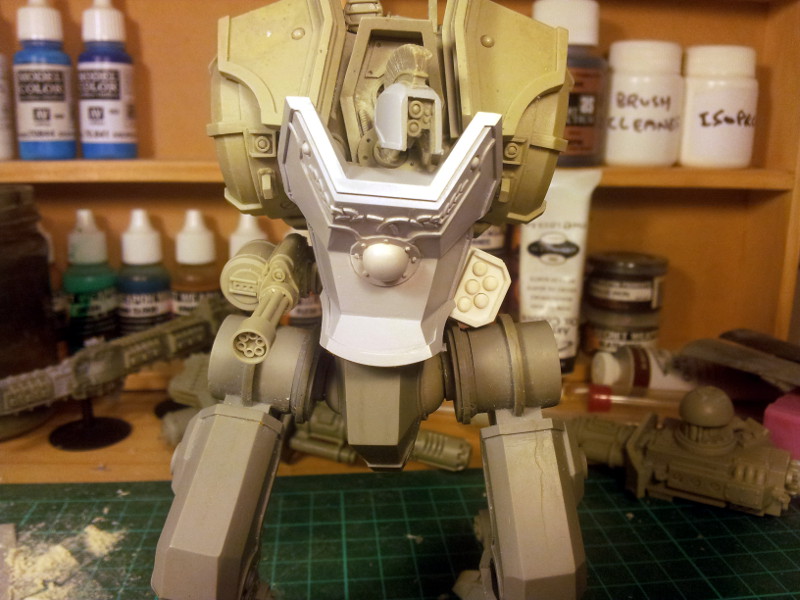
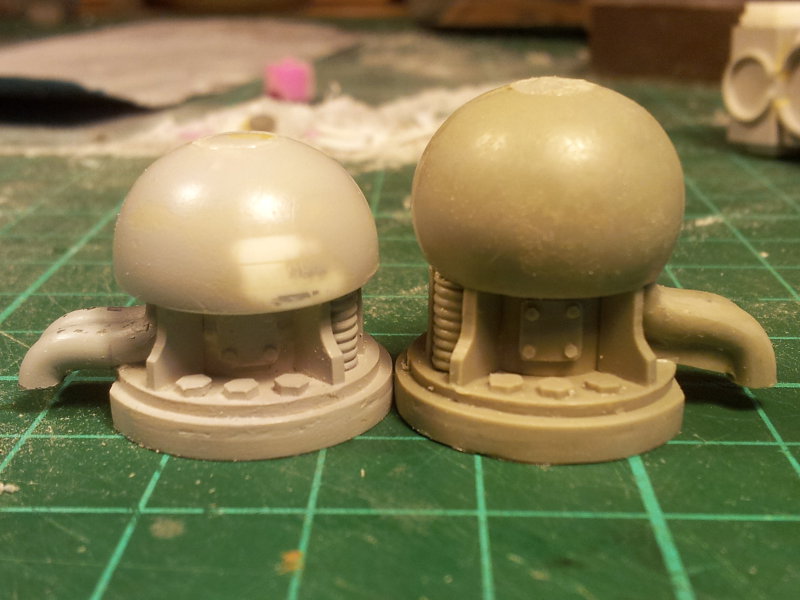
Anyway I’ve been doing some more work on the waist, as you can see in the first pic. I’m really happy with how it’s coming along and am actually considering not covering it up with the amount of armour panels I had originally planned!

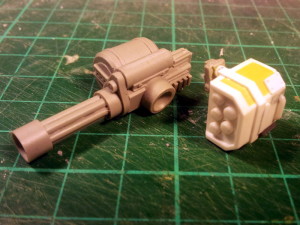
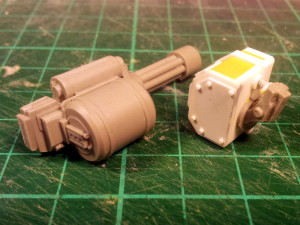
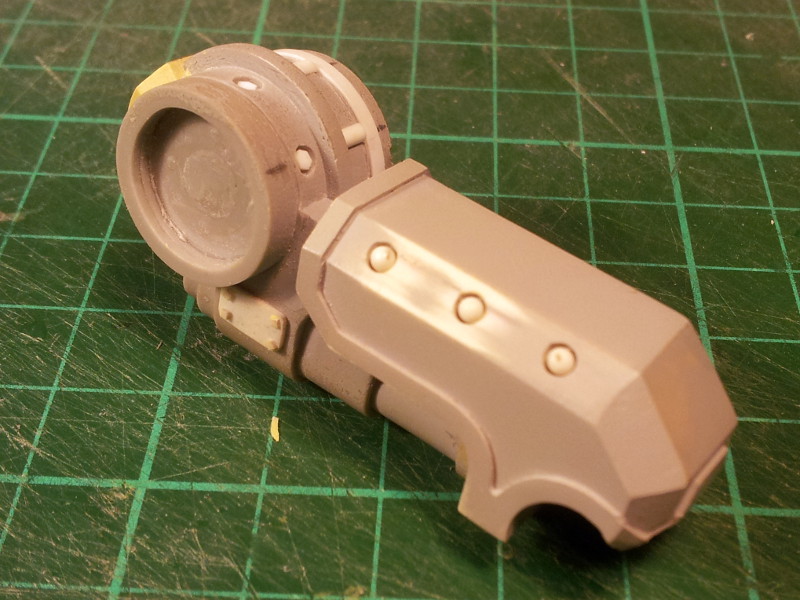
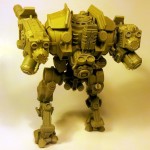
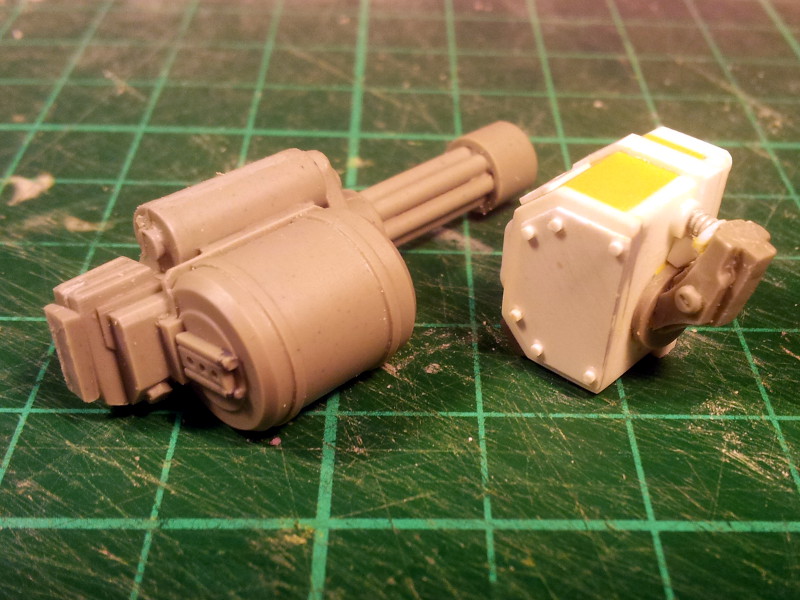
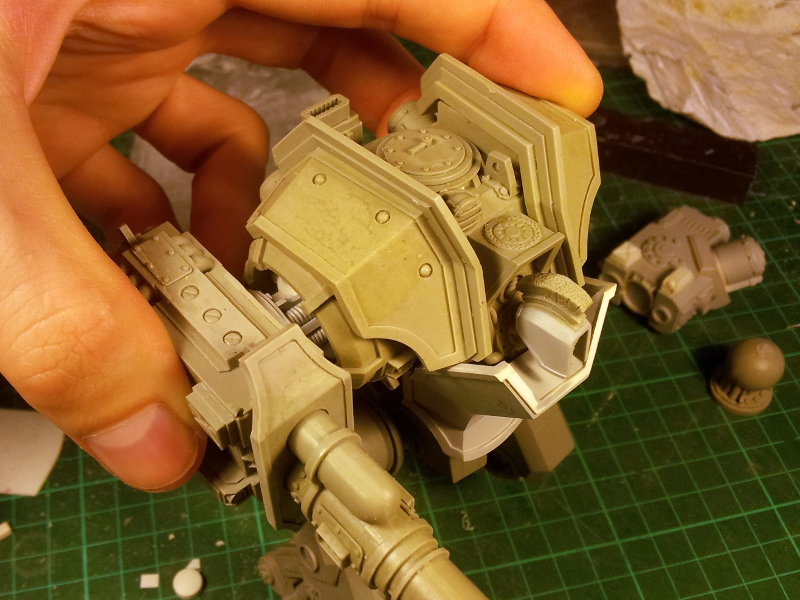
This next pic is a heavily WIP shot of some of the other torso parts. In the background is the very basic form of the reactor, which will hang diagonally downwards from the rear of the waist. I’m not happy with that slotted disc in the middle so will be doing a lot more refinement there. The area between the two styrene panels will be filled with putty to bulk it up. Lots of hoses and technical looking bits will also be added.

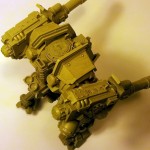
In the foreground are the beginnings of the two cylinders that will make the shoulder arm/weapons mounts. Obviously still pretty bland at this stage – again lots of detailing to do ;)

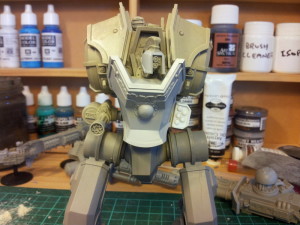
That’s it for now. I guess I’ll continue work on the reactor, and make a start on the vents which will mount on the front of the torso (as per the sketch Xeones did)…

Review: Dreamforge Sturmtruppen

When Mark Mondragon (isn’t that just a cool name?) of Dreamforge Games posted some 3D model WIP shots for some figures for his Iron Core setting we all knew he was on to something cool. He decided to jump on the kickstarter bandwagon and with such promising designs I decided I’d back him on it. I have absolutely no use for them but do feel that it’s important to support those who are making high quality miniatures as an alternative to Games Workshop and Forge World.

Mark was working on two troop types: Kriegsmarine and Sturmtruppen, being the standard and elite troops respectively. It was the Sturmtruppen that grabbed my interest so I decided to pick up a pack of 5 of them in the kickstarter campaign. It took a while for Mark to finalise the designs (he went through a couple of 3D print revisions) and get them cast but I finally had a package arrive the week before last.

I’ll be honest and say that when I discovered that the figures would be metal cast I was a little disappointed. I’m sure it will come as no surprise to hear that I just have a strong preference for resin – this is mainly due to the superior level of detail that a resin cast can reproduce. Mark knows his stuff and not only does he have a very good spincaster, but he has designed the figures with a perfect level of detail for metal reproduction. Not to mention breaking them up into parts perfectly.

The casting is perfect. Now I’ll be honest and admit that I haven’t bought all that many metal miniatures over the years, but those that I have bought were all Games Workshop. Let me say that the Dreamforge metal casting quality leaves the GW casts for dead. There really is no comparison. The slight mould lines that are discernible are well placed to make removal easy. There was no mould slip at all. I was impressed!

I only have one negative comment: print lines. Many miniatures manufacturers have turned to 3D modelling to design their kits. In order to translate the 3D model into a master pattern that can be moulded a 3D printer is used. Unfortunately all but the most insanely expensive 3D printers produce striation-like lines in the finished print where each layer slice meets the previous. The 3D print therefore needs to be have its surfaces cleaned up by hand to ensure a smooth finish devoid of these print marks. I was quite shocked recently to see some close up images of the new Secret Weapon 6×6 Rapid Assault Vehicle which showed really prominent print marks on some of the flat surfaces of the cast models. To be blunt this is unacceptable.

But I digress! The reason for the explanation of the print lines is that I did find some on my Sturmtruppen minis. The top of the collar still has these obvious marks visible, but at least they are very quick and easy to remove from there with a file. In fairness to Mark I know that he does spend a lot of time and effort cleaning up his prints prior to moulding so it’s quite possible that the top of the torsos just slipped through. And the rest of the models are flawless so I really can’t deduct any points for this ;)

I’ve only assembled one of the Sturmtruppen as a test. I figure I’ll wait until I know what I’m going to do with them before I assemble the rest! I guess I’ll build up some kind of vignette/diorama to mount them on (I’ll just add that to the list of projects!). Certainly within the 5 figures I received the poses seem varied enough. There’s also a couple of different weapon types. Actually what I think is even more enticing is the “command squad” style figures that Mark has planned for future release.

So all in all I’m very pleased with the Dreamforge figures and couldn’t recommend them enough! It will certainly be exciting to watch the range grow as Mark expands and fleshes out his Iron Core universe.

Centurion Update

Well I thought it’s about time I posted an update ;)

If I’m honest I kind of wore myself out a bit over the first few weeks stuck back into this project, so progress has slowed to a more subdued pace. This is probably mainly due to me having a heap of other stuff going on, such as spending the last weekend catching up with mates on the Gold Coast.

Anyway I’ve been working on what is best described as the waist/spine piece. The arrangement of the pelvis and groin armour means that the waist connection needs to be offset to the rear of the mecha. This allows the waist to rotate without fouling on the groin armour. I decided to incorporate a ball joint that will form the “spine” and allow the torso to bend and tilt. Similar to the hip ball joints the spine will have a pair of pistons on the front. Of course much of this will be covered with armour plates on the actual model!

This is the waist piece:

The area below the ball will have a heap of recessed hex bolt heads. There will also be some triangular braces added. I actually screwed it up and had the piece at too steep an angle so have just tonight hacked it off and reset to a shallower angle. I’ll fill all of the gaps with some Milliput after I post this ;)

And just to show what’s going on here’s a pic of it mounted to the pelvis:

Plenty more cool ideas for the torso design are milling around in my head so I’m feeling confident about my “design as I build” approach!

Sherline Model 1000 Speed Controller Repairs

Huh? Isn’t this a hobby blog? What’s with this electronics stuff? Well over the last 18 months I’ve become quite reliant on my Sherline model 1000 lathe (and its attachments) for a large portion of my modelling work. It has an electronic speed controller built onto the motor and I had noticed that the maximum speed had been gradually getting slower. Not surprising since the machine is about 10 years older than I am!

Well a couple of nights ago the speed controller gave up and would only give two speeds: slow-crawl and insane-fast. So this morning I pulled it apart to have a look at the problem.

The setup is a basic DC motor running on half wave rectified 240VAC, with an SCR chopping the wave to control the speed. You can see a schematic I reverse engineered from the PCB below. It’s using pretty old-school components, including some carbon composition resistors. I at first suspected one of the semiconductors but some basic testing with a multimeter proved that the diodes and SCR were most likely fine. So I checked out the speed control pot, thinking maybe the wiper had gotten dirty. But that too seemed fine. Capacitors checked out OK so the last things left were the resistors.

I can’t recall ever having a faulty resistor, but I figured since these ones were so old I’d best stick the ohmmeter across them. Lo and behold, the 82k resistor in series with the SCR anode had crept up to approaching 1 meg! I pulled it off the PCB and checked again. The expensive Fluke meter never lies! I had no idea what the power rating of the failed resistor was, but I found a similar sized part with the same value in my box of odd resistors and stuck that in. I’ll check it again in a few weeks and make sure there’s no signs of overheating that would present is the power rating of the replacement resistor was too low.

So that’s the story! I decided to post it here in case anybody else has the same problem and is Googling it ;)

Centurion update

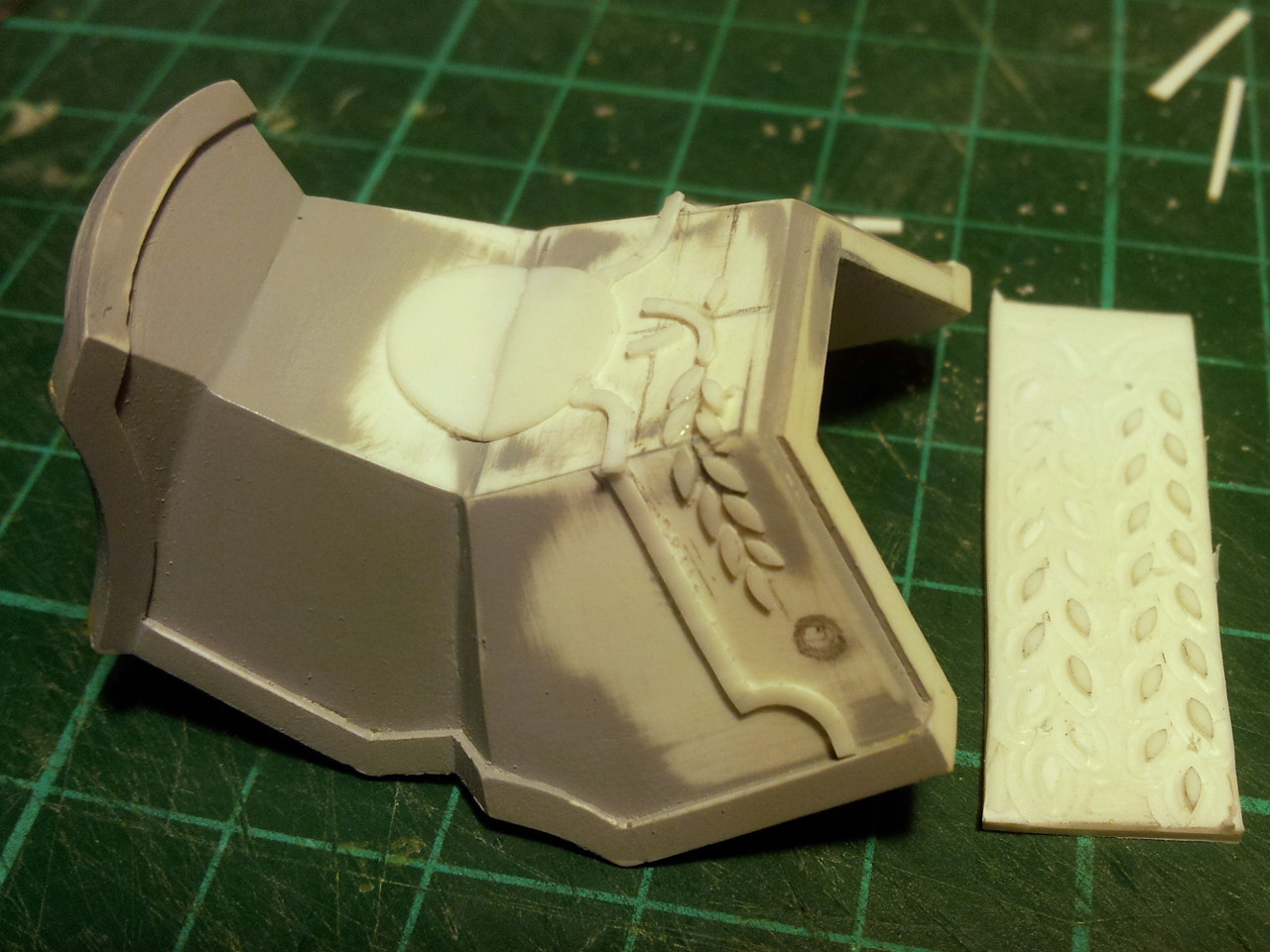
I had a play around with the brass etch today and thought I’d post a quick update. I ended up putting two of the smallest size icons on the sides of the bottom pelvis armour banding and think it’s turned out quite nicely. I also hit it with a final coating of Mr Surfacer to prep it for moulding (along with the pelvis). I guess I’ll make the moulds up tomorrow.

Just for kicks I also hit the brass etch sheet with a coat of Mr Surfacer to bring it all up to a uniform colour:

Looking at it like this the depth of etch seems just fine. The only reason deeper etch is necessary is to make it easier to cut the individual icons from the sheet. I really like the icon with the laurels around it – for reference the largest one is 20mm diameter. I’ll do one with an additional circular border around it to use as a main icon somewhere on the torso. Although 20mm diameter is far too big – the 14mm ones produce adequately sized details that will reproduce in resin nicely enough.

I’ve played around a little more with my clay torso mockup but I’m going to blame my inability to produce something really worthwhile on the fact that the hot weather makes the clay too soft to work with, rather then the fact that I just suck at sculpting like that  :rolleyes:
My friend Xeones on the Resin Addict forum made some great suggestions and did a cool torso sketch based on my clay mockup. While it’s not exactly the style I’m planning, he has introduced some great visual ideas and so I believe I now have a solid enough plan of what I’m doing to start work on the actual torso model. Hopefully I’ll have some reportable progress (i.e. pics) during the week ;)

Centurion update: brass etch!

Brass etch update: we have some success!

Using Canon laser toner certainly helped, but I also after some further reading found that someone was recommending running the brass and press-n-peel sandwich through the laminator 25 to 50(!) times. I settled for around 10 (I didn’t actually count) with my modified high temp laminator and that seems to have given a good result. Out of interest though I will try again with the Brother toner and a higher number of passes.

Here’s the progress shots. This is the press-n-peel film with the artwork printed onto it, next to a nice clean piece of copper:

The press-n-peel is then placed on top of the brass sheet and the two run through the lamintor several times. It’s then quenched in water and the press-n-peel peeled off. This leaves you with the top half of the next picture:

You then cover the back of the brass with something to protect it (I used packing tape which seems to have worked well) and drop it into a bath of etchant (I use ferric chloride). The etchant was a bit old so it took ages (which also adds the danger of over etching parts) but in the end I ended up with the bottom half of the above pic.

That mottled effect of the brass really isn’t as pronounced in person and isn’t a problem. The etching depth wasn’t as deep as I’d have liked so I will test a new piece with fresh etchant to see if I can’t get better results. I will hit this piece with some Mr surfacer though (the brass etch is too fine to risk praying anything from a rattle can onto it) and see just how (in)appropriate this depth is.

The really stupid thing is that after all of this, it turns out that the smallest icon size I made is just slightly too big for where I was thinking of fitting it on the pelvis armour! D’oh! I might just stick one of the bigger icons in a different spot…

While I was waiting for the etching process I also built a stand for testing out torso sculpting but I forgot to take a pic. Will do that tonight ;)

Centurion update

Despite the wet weather we’ve been having I haven’t made much modelling progress this weekend. What I have done is begin finalising the pelvis armour. The mounting points for it have been added onto the back (along with my favourite new cast iron texture) and I hit the piece with a layer of Tamiya surface primer from a rattle can to check consistency. It’s amazingly symmetric! Some banding (using my scan – Inkscape – CNC router trick) is next on the agenda, along with some other details.

The pelvis is slowly receiving more cleanup but it’s pretty much done now. I’ll be testing out my new brass etch system in the coming week which will produce the icons I will fit to pieces like the groin armour.

Once the pelvis is done I’ll start work on the torso, the first step of which will be coming up with a basic shape. I’ll probably start with the back and design the reactor first as that will setup the proportions. Early on I’ll have to design the pilot too, although at this stage I’m probably going to spring for a decent figure sculptor to do it for me. With the pilot done the cockpit can be made and then the rest of the torso built up around that. I think I’m going to finally have to start sketching some stuff in planning for these elements…

New Scratchbuild: Centurion Mecha

So a little over a year ago I decided to start building a 28mm mecha model that was part dieselpunk, part 40k, with the intention of releasing it as a resin kit. It was a style I wanted to have a go at (as opposed to the clean ultra-futuristic Tau mecha stuff I had worked on in the past) and I figured a few people would want to use it as a Knight Titan stand-in.

The project got off to a nice start but a couple of months in it got shelved. I don’t quite remember why, although the influx of BFG commissions didn’t help. Oh and work got really busy. And having a girlfriend sucks away hobby time (single again – woohoo!). Anyway after getting the last in a line of BFG scratchbuild projects finished I decided I’d had enough of stupidly small details and turning up 1mm diameter gun barrels on my lathe and would get back to some 28mm modelling. Ahh what a breath of fresh air!

Now I consider myself pretty good at scratchbuilding, however I know what my talents are and drawing is not one of them. At the outset of the project I did have a couple of attempts at sketching up designs but let’s just say they were worse than atrocious. I mean they kind of conveyed basic forms but really there wasn’t enough information to reference for the build so I scrapped them. I figured I’ve had enough experience at this stuff I’ll just wing it and design as I go. That’s not to say I didn’t have basic mental ideas for the design; general proportions, configurations, etc. I looked at a lot of Warmachine Warjack models and concept art as inspiration, along with the awesome work of Luca Zampriolo (Kallamity)

Before the project got shelved I had the leg designs 75% done. All that was left was detailing and finishing. At the end of this post I’m going to dump a bunch of randomly selected pictures of the progress to that point without any explanations. Feel free to ask questions ;)

Last year I bought myself a small Chinese CNC router so my model making process is now a combination of 3D modelling, vector drawing, CNC machining, turning shapes on my lathe and good old traditional pushing putty around (Milliput is still the putty of choice). The CNC routing I generally use in just a 2.5D mode, drawing parts in Inkscape and then cutting them out in styrene sheet. It facilitates beautiful geometric shapes that would simply take far too much time to cut/file/sand manually. For example the tread on the sole of the foot was all cut on the router:

The lathe has become an indispensable piece of equipment in my scratchbuilding quiver, to the point that I don’t know how anybody else does without it! I could never turn something up by sticking it in a dremel again! It’s an old Sherline miniature lathe that I scored for AU$90 a couple of years back. You can read more about it and some of the mods/attachments I’ve done here. The CNC machining of many pieces meant that some degree of the model has been drawn up digitally, either before or after it was physically built. So I guess I did do some pre-design/concept work…

Once the parts are nearing completion I hit them all with a coat of Mr Surfacer 500. It’s a fine putty/primer that’s great for both filling small gaps/nicks/flaws in the master parts, but the primary objective is to get all of the parts a uniform colour (rather than the random mix of white styrene, green-y Milliput and grey Tamiya putty, plus pencil lines, grey Kotobukiya parts, etc.), which help immensely in getting an overall feel for how the parts are actually looking. If being real hard core one would do this a couple of times for each part, but I’m too lazy for that – it takes a lot of stuffing around setting up the airbrush (and more so cleaning it afterwards). Here’s a shot of the primed parts:

Actually, a lot of that primer gets sanded back as all of the little flaws are repaired. Oh also note the yellow tape around the large cylindrical hip joints of the upper legs. It’s just Tamiya masking tape and it’s there to prevent damage to the nice crisp edges as I muck around carving and sanding the thigh armour plates.

The thigh armour plate banding as seen in one of the earlier WIP shots was deemed too thick and thus replaced with some beautiful CNC cut pieces in 0.5mm styrene. I simply laid the parts on a scanner, scanned and scaled the parts to 100% in Inkscape and then drew up the new banding. 5 Minutes with the CNC router and I have perfectly formed new banding ready to be glued on armata_PDT_34.gif

So last weekend’s distinct lack of lack of social or other engagements meant that I had a wonderful weekend of modelling and have now got something serious to show for it. All of the leg components (excluding the knee armour plate) have been moulded and duplicated in resin and the hips/pelvis are well under way.

Next we have the photographic proof of an assembled set of resin components. They assemble very easily with a few drops of super glue. Some of the moulds have a couple of small bubble air issues so I’m cutting wider/extra air channels into them, but these test parts are still a little bubbly. And have some more-than-slight mould slip in areas. None of this will be an issue for production moulds.

Note that the left leg isn’t attached to the pelvis – the hip piece will be a duplicate of the right leg hip piece (so I only need to master the one).

The next shot shows what the leg looks like side on – pretty much the same as it always has, I know, but everything looks better in monotone grey resin. Also included is a shot of the foot showing the resulting tread pattern – very happy with how this turned out!

The pelvis piece has been coming along nicely also. It’s kind of hard to see in the WIP state, especially with the ball joint sections made from clear perspex (my fuzzy photography didn’t help either). The ribbed hoses are a great product from Dragon Forge Design. Although I assume they are just casts of regular wound guitar strings, being pewter they are so easy to bend into the desired shape and they stay there! Seriously anybody doing any kind of scratchbuilding or even just conversions should get some!

Oh and hex styrene rod is awesome too. Perfect for making bolt heads and nuts (rivets get boring). Pro tip: look for Plastruct stockists, as they will let you buy single rods rather than a pack of them. Such specialists materials like that you’re better off with large variety over volume.

The hip piece turned out very nicely with its recessed bolt heads:

With the pelvis and hip nearing completion it was time to go at it with the Mr Surfacer again. It’s always a mixed emotion afterwards: it’s very cool to see the parts in a uniform grey colour to get a sense of what they really look like, but it also shows up very single tiny little flaw (such as the tiny bits of leftover Milliput and stuff like that). So the next step is simply running around with some fine grit sandpaper to clean it all up once the primer has cured nicely.

I also decided that the knee armour was too boring so before I cast it up I designed and added a tie down shackle setup:

 
And that brings us up to date pretty much to the minute. The knee armour and hip pieces have all been finished so the next milestone will be completing the pelvis. The pelvis itself is 90% done – I’m now working on the groin armour plate which forms the front of the pelvis. It will be mounted via some beefy looking cylinders. It took me a while to come up with a shape but I’ve got something I’m happy with now and will build it up over the weekend. Then do the scanner and router trick to make up the banding for it!

I would like to place some iconography about the model so I’ll be trying out some brass etch in the coming week. I did have some failed attempts at it a year ago (the beginning of the project), but armed with the laminator I’ve modified from this article I’m expecting better results!

I have to say, any reservations I have had about this project have well and truly evaporated following the assembly of the resin parts like this! I’m really excited about where it’s going! Once the pelvis is completed and cast I’ll be able to start playing with torso mockups made of clay – I’ve got some cool ideas for that too!

Book Review: Abakan 2288 by Luca Zampriolo

If you’re a mecha model fan and haven’t at least seen the work of Luca Zampriolo (even if you didn’t know who it was done by) then you must have been living under a rock! His website - Kallamity.com – showcases both the resin kits he has produced over the years and, more importantly in my opinion, presents a lot of work in progress shots of his projects. Luca’s mechanical design style is instantly recognisable and I’m a big fan.

In late 2011 Luca’s first book became available: Abakan 2288: Kallamity’s world of mecha design. I was aware of it at the time of release but for some reason I didn’t pre-order it. I think because it was relatively expensive and I couldn’t find any page previews. Well fast forward to last week and I stumbled across a mention of the book again. I saw a couple of page previews which looked promising, and checking Fishpond.com.au revealed that it was only AU$31.54 with free shipping! So I placed an order and was pleasantly surprised to have it arrive a couple of days later.

Let me say that this book lived up to the expectation.

Abakan 2288 begins describing the backdrop that Luca has created for his fictional universe. It chronicles major points in mankind’s history up until the year 2288. The traditional economy has long since collapsed and a special, extremely high energy content gas mined from Jupiter and returned in a crystalline form has become the primary fuel in use. Metal is now the dominant commodity and its trade and use the best analogue to a currency. This bleak future has paved the way for massive anthropomorphic machines to become a valuable resource and several generations of continual improvement have now produced extremely hard wearing designs.

Through the rest of the book the fiction is interspersed with design and construction notes of the actual model, for several of Luca’s designs. It’s this “non-fiction” content that I bought the book for and was far from disappointed! Already I have learned several little advanced modelling tricks. Throughout the book are many pages that contain a grid of many small photos showing small details and construction phases. The following is a photo of one such page. My only complaint is that I wish many of these detail pictures were bigger!

Overall I found the book very enjoyable and it’s a great addition to the scratch builder/modeller’s library. Highly recommended!


Completed Project: Strike Cruiser Conversion Kit

I trust everybody had a Merry Christmas! Accompanying the festive break for me is a fortnight of holidays, which has given me some time to get stuck in and finish some projects! The first task is to knock over my pending BFG projects so that I can get back to some 28mm modelling (which I’m really starting to miss).

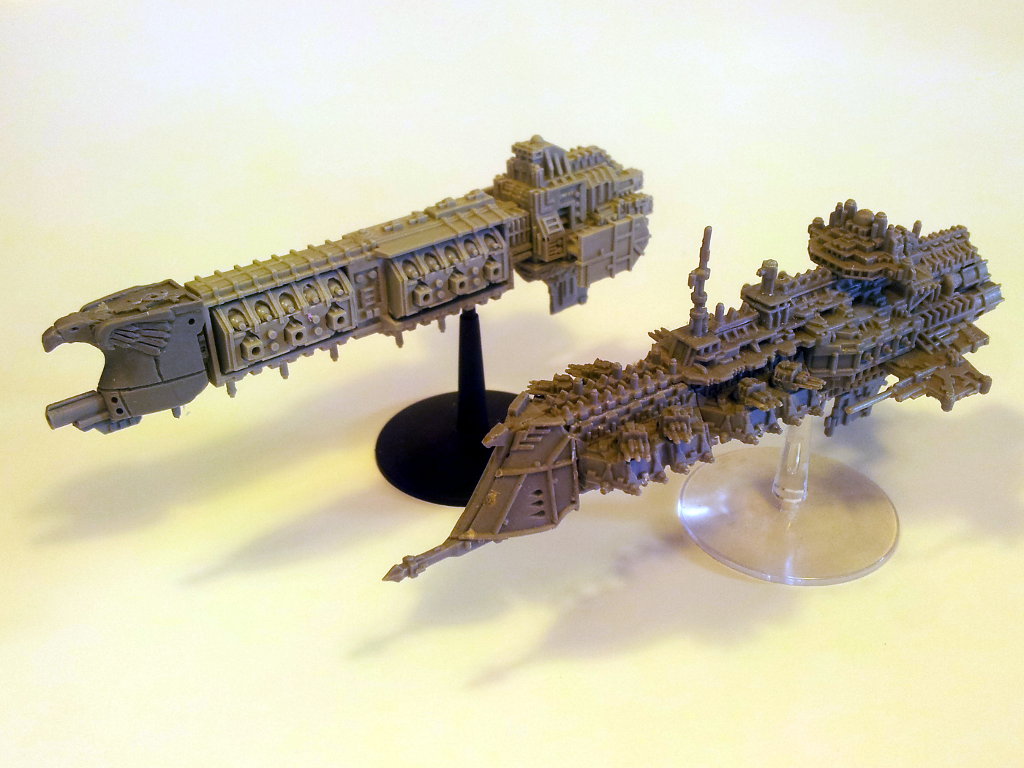
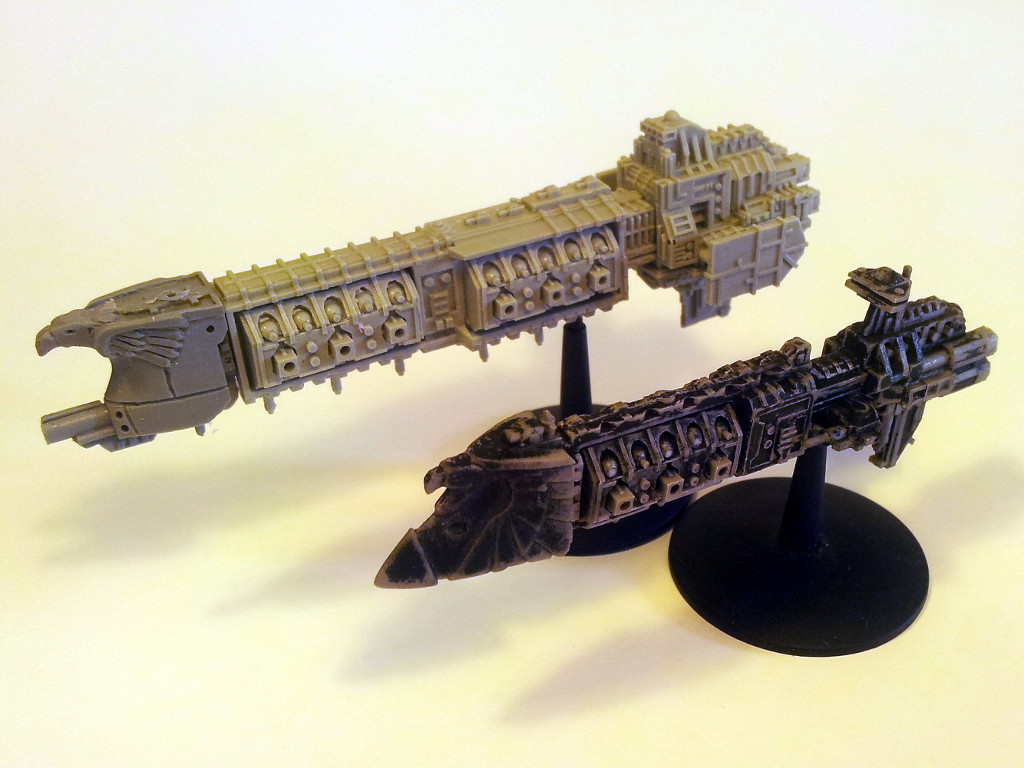
This is a project I’ve had on the workbench for far too long. It’s something that Vaaish approached me with early this year. The premise was that he wasn’t a big fan of the GW Space Marine Strike Cruiser design. He much preferred the FW Grey Knights Strike Cruiser, not to mention that oddly enough the FW model is half the price of the GW one! The problem with the GK SC is that it has the GK style curved prow and side fins, preventing it from fitting in to the rest of the Space Marine naval aesthetic.

So the plan was to make a new prow and side fins that could be used with either the FW or the GW Strike Cruiser models. Easy huh?

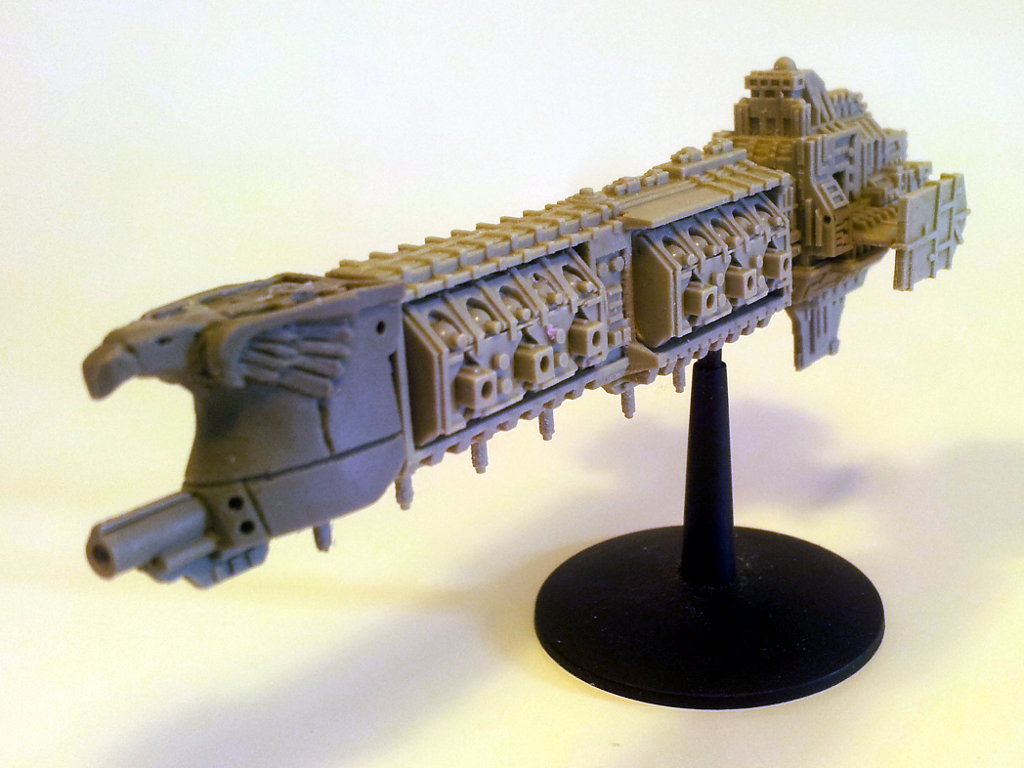
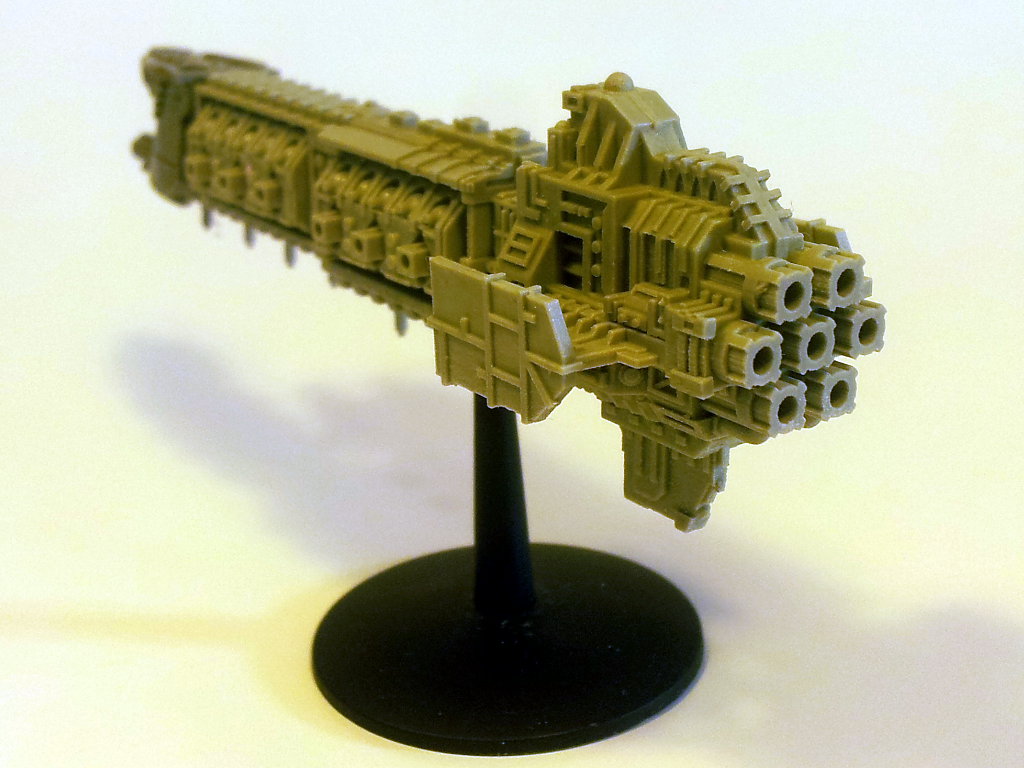
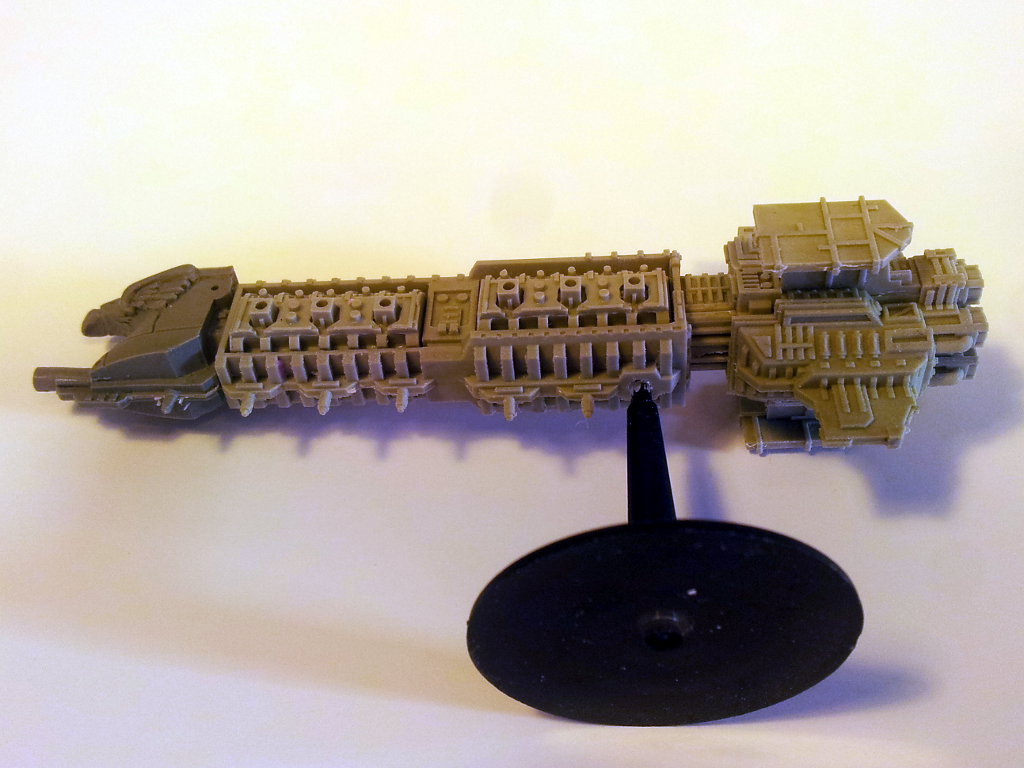
Much of the build process was chronicled in the Resin Addict Forum and yesterday I finally moulded up and cast the finished pieces. It has turned out quite nicely and in an amusing twist it turns out that Vaaish prefers the look of the conversion kit on the GW model rather than the FW one like he had originally planned to outfit his fleet with. Fortunately for him he stumbled across a glut of GW strike cruiser models for a very keen price somewhere online!

As always feedback is welcome. Enjoy!